


トレーニング記録 #1: 第3回奥武蔵ロングトレイルレース完走に向けて私が1年間で成し遂げたこと

2024年の第2回奥武蔵ロングトレイルレース105Kでは、私は最終エイドへ向かう途中で体調不良となり、リタイアしました。
とても悔しい結果でしたが、その経験をきっかけに、1年間かけてトレーニング内容を見直しました。
その結果、翌年の第3回奥武蔵ロングトレイルレース105Kでは、無事に完走することができました。
この記事では、私が完走に向けて1年間でどのような練習を積み重ねたのかを、月ごとの走行距離、走行時間、累積獲得標高をもとに振り返ります。
結論から言うと、私にとって重要だったのは、毎月たくさん山に行くことではなく、まずは平地でもよいので長く動き続ける土台を作ることでした。
そのうえで、レースが近づく春以降に、アップダウンの多い実戦的な練習を加えたことが、完走につながったと感じています。

すべての測定には一貫してPOLAR Vantage V3を使用しました。すべてのデータは、POLARの公式アプリケーションであるPolar Flowから取得しました。
この記事で伝えたいこと
今回のトレーニング記録から、私が特に重要だと感じたことは3つあります。
1つ目は、夏から秋にかけて、まず走る習慣と基礎体力を作ることです。
暑い時期は速く走るのが難しいため、無理にペースを上げるよりも、ゆっくりでもよいので走る時間を確保することを意識しました。
2つ目は、秋以降に走行距離を安定して増やすことです。
9月以降は気温が下がり、月間250km前後の走行距離を維持できるようになりました。
3つ目は、レースが近づく春以降に、アップダウンに慣れることです。
奥武蔵ロングトレイルレースは、小さな上り下りを何度も繰り返すコースです。
そのため、春以降はトレイルレースに出場し、実際に上り下りを繰り返す練習を行いました。
月ごとの走行距離と走行時間
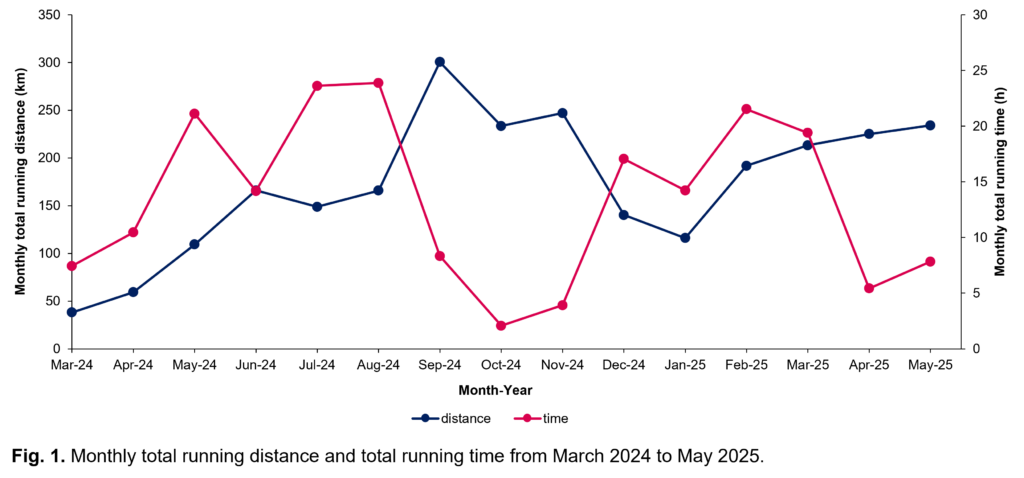
Fig. 1(図1)は、私の2回目のレース前の3月から、3回目のレース直前の5月までの月間総走行距離と月間総走行時間を示しています。
横軸は各月と年(24は2024年を意味します)
縦軸は1カ月あたりに走行した距離(左軸:紺色)と費やした時間(右軸:赤色)を示しています。
この図で見てほしいポイントは、走行距離と走行時間が、時期によってどのように変化したかです。
リタイア前の走行距離は少なかった
2024年6月(Jun-24)の第2回大会に出場するまで、私の月間走行距離は100km未満でした。
その結果、私はレース後半で体調不良となり、リタイアしてしまいました。
105Kのレースに挑戦するには、十分な練習量とは言えなかったと思います。
夏は無理に速く走らず、長い時間移動する習慣作りに徹した
リタイア後の7月と8月(Jul-Aug)は、翌年の完走に向けて練習を再開しました。
ただし、夏は暑さの影響で、速いペースで走ることが難しい時期でした。
そのため、この時期はスピードを求めるよりも、ゆっくりでもよいので長い時間移動する練習を意識しました。
月間走行距離は150kmほどでしたが、まずは練習を継続することを優先しました。
体への安全面を考慮しても、この戦略は有効だったと思います
秋は走りやすく、走行距離を増やせた
9月(Sep)以降は気温が下がり、走りやすくなりました。
その結果、9月には月間走行距離が300kmに達しました。
9月から11月(Sep-Nov)にかけては、月に約250kmを維持しました。
この時期にしっかり距離を積めたことは、完走に向けた大きな土台になったと感じています。
たまにトレイルに出ることをお勧めします。
冬は寒さと体調不良で練習量が落ちた
一方で、冬になると走行距離は大きく減少しました。
特に、2024年12月(Dec)から2025年1月(Jan)、気温が低く、仕事の後に思うように走ることができませんでした。
この時期は、レースを完走できるのか不安になることも多かったです。
ただ、練習が一時的に途切れても、そこで完全に諦める必要はないと感じました。
大切なのは、体調が戻ってから少しずつ練習を再開することでした。
2024年12月にはCOVID-19にも感染してしまい、トレーニング減少に拍車をかけました。。。
2月以降は少しずつ復調した
症状が落ち着いてからは、徐々に安定して走れるようになりました。
2025年2月から5月(Feb-May)にかけては、月間約200kmの走行距離を維持しました。
冬に練習量が落ちた時期はありましたが、春にかけて再び練習を積み直すことができました。
走行時間からわかること
走行時間を見ると、2024年8月(Aug)までは比較的長い時間をかけて走っていました。
これは、当時の体力がまだ十分ではなかったことに加えて、暑さの影響でペースを上げにくかったためです。
一方、2024年9月から11月(Sep-Nov)にかけては、走行距離が増えたにもかかわらず、走行時間は減少しました。
これは、少しずつ体力がつき、以前よりも速いペースで走れるようになってきたことを示していると考えています。
この時期に週1日はインターバルトレーニングの日をとりいれていたのも、走行時間が短くなった理由になっていると思います
夏はゆっくり長く走る時期。
秋は距離を増やしながら、少しずつ走る力を高める時期。
私にとっては、このような流れで練習を進められたことが良かったと思います。
各月の累積獲得標高
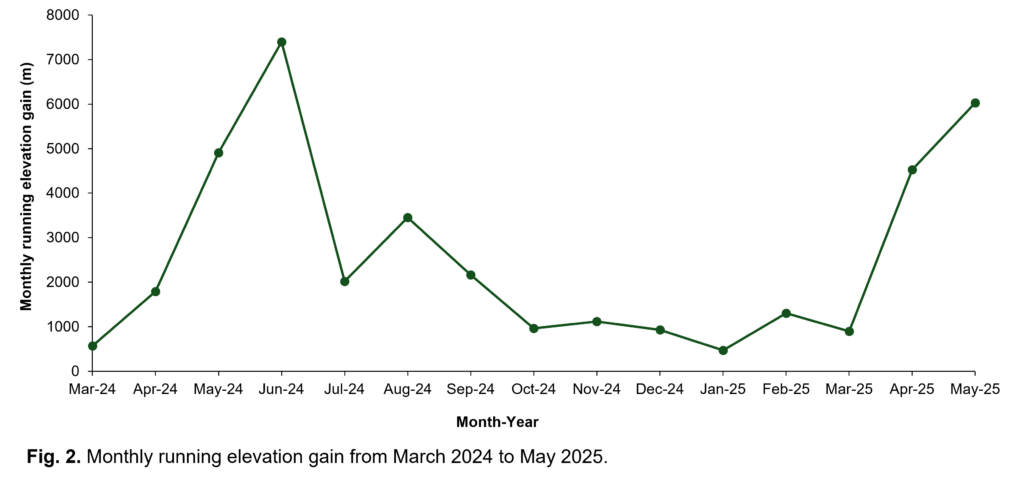
Fig. 2は私の月ごとのランニング標高上昇を示しています。横軸は年月、縦軸は各月の累積獲得標高を示しています。
ここで見てほしいポイントは、私は1年を通してずっと山で多くの標高を稼いでいたわけではない、ということです。
2024年10月(Oct-24)から2025年3月(Mar-25)にかけて、累積獲得標高は約1,000m程度にとどまっていました。
この時期はトレイルでの練習をほとんど行えていなかったことが分かります。
それでも、平地で長く走る練習を続けることで、105Kに必要な基礎体力を作ることはできたと感じています。
一方で、レースが近づいた2025年4月と5月には、累積獲得標高が増加しました。
これは、4月と5月(Apr-May 25)にトレイルレースに出場したためです。
この2つのレース参加を通して、上り下りを繰り返す感覚を実戦の中で確認できました。
2025年の4月は青梅高水パラチノース国際トレイルランの15K、5月にFTRみなの50Kに出場しました。
奥武蔵105Kに向けて大切だと感じたこと
奥武蔵ロングトレイルレースは、小さな上り下りが何度も続くコースです。
長い距離を進み続ける力だけでなく、上って、下って、また上るという動きに慣れておく必要があります。
そのため、レースが近づく春以降は、山での練習やトレイルレースへの参加を通して、アップダウンに慣れておくことが重要だと感じました。
一方で、冬の間から毎月たくさん山に行く必要があるかというと、必ずしもそうではないと思います。
私の記録を見る限り、冬の時期は獲得標高を増やすことよりも、平地で長く走る練習を続けることに意味がありました。
仕事や学業が忙しいと、毎週のように山へ行くのは難しいと思います。
そのような時期は、無理に山へ行こうとするのではなく、平地で走る時間を確保するだけでも十分に意味があると感じています。
大切なのは、完璧な練習を目指することではありません。
その時期にできる練習を続けることです。
まとめ
リタイア前の月間走行距離は100km未満であり、105Kを完走するには十分な準備ができていなかった。

リタイア後の夏は、暑さの影響で速く走ることが難しかったため、ゆっくりでもよいので走る時間を確保することを意識した。

秋以降は気温が下がり、月250km前後の走行距離を維持できるようになった。

冬には体調不良で練習量が落ちたが、2月以降に少しずつ練習を再開し、月200km前後の走行距離を維持できた。

そして、レースが近づいた春以降は、トレイルレースに出場して、上り下りを繰り返す実戦的な練習を行った。
奥武蔵105Kの完走を目指すうえでは、まず長距離・長時間動き続けるための土台を作ることが重要だと感じました。
そのうえで、レースが近づいた時期に、アップダウンの多い練習を取り入れる。
この流れが、私にとっては完走につながったのだと思います。
山に行けない時期があっても、焦る必要はありません。
平地であっても、長く走る練習を続けることには大きな意味があります。
そして、レースが近づいてきたら、少しずつ山やトレイルレースを取り入れて、実戦に近い動きに慣れていく。
これから奥武蔵ロングトレイル105Kの完走を目指す方には、そのような考え方でトレーニングを組み立てることをおすすめします。
関連情報
今回は、POLARのスマートウォッチから得られたデータをもとに、1年間の走行距離、走行時間、累積獲得標高を振り返りました。
スマートウォッチは、単に走行距離を記録するだけでなく、自分の体調や練習量を振り返るためにも役立ちます。
興味のある方は、ライフログに関する記事もぜひご覧ください。
次回、各トレーニング強度を示すゾーンに関する情報を公開します!