


Hello 2026! My Challenge for Mt.FUJI100
Happy New Year 2026!
Last year, I participated in many trail races. But for this year, I have some exciting news.
I’m going to run the Mt.FUJI100mi (167km)!
It will be my first time running this distance. I plan to write about my race preparation and share a review after the race.
I would appreciate it if you could continue to support Osaki Kotoni this year.
Let’s make it a great adventure season!
Japanese New Year Traditions
Kamidana(神棚)
It is a small altar for gods in the house. We pray here for our family’s happiness.
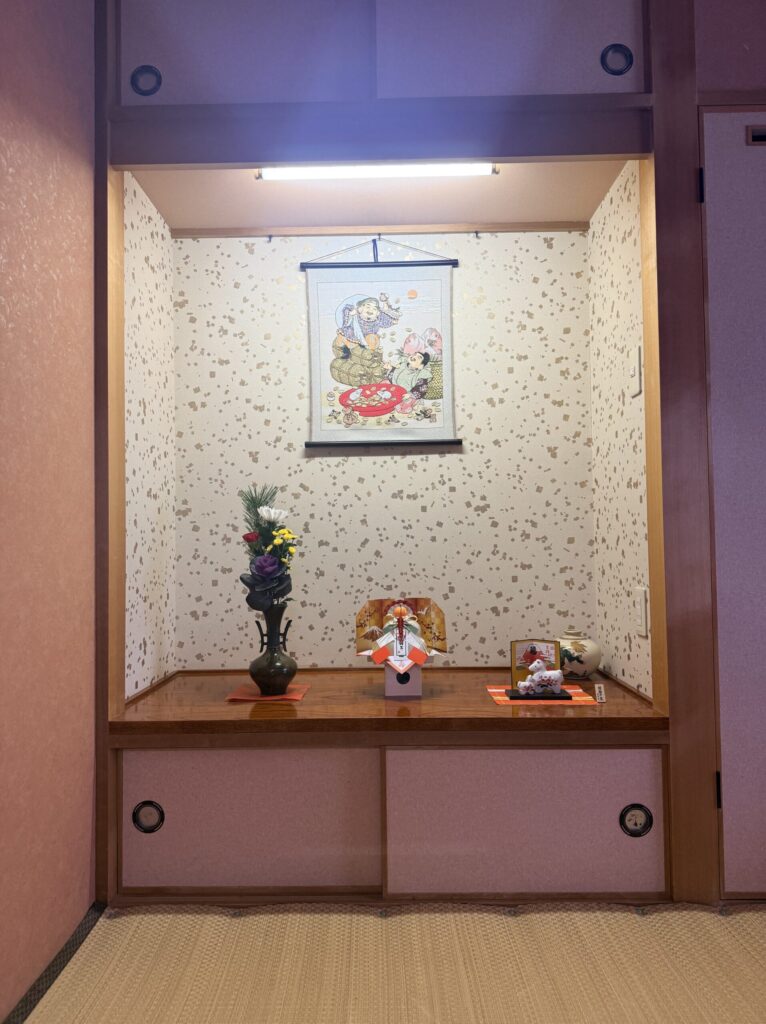
Every family decorates their household altar in their own unique style.
Habotan and Pine (葉牡丹と松): This arrangement features habotan (ornamental cabbage) and pine. Pine symbolizes longevity because it remains green throughout the year.
Kagami Mochi (鏡餅): Stacked rice cakes offered to the New Year gods. The round shape represents family harmony.
Year of the Horse Figurine: 2026 is the Year of the Horse in the zodiac. This ornament is displayed to welcome the new year.
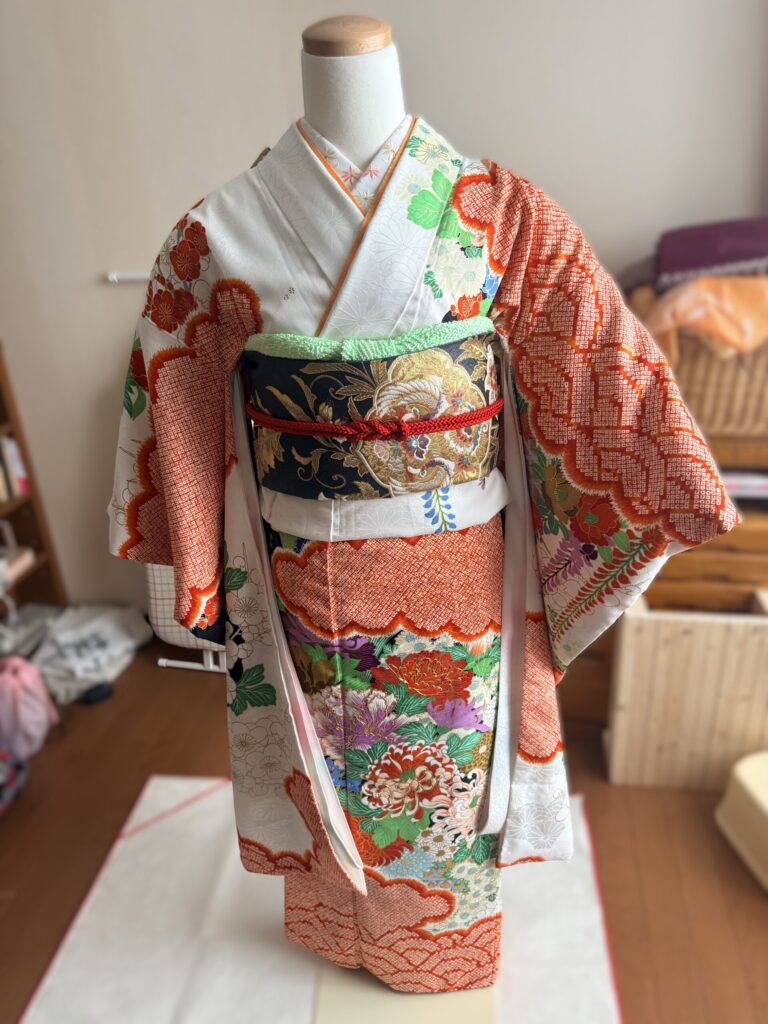
Furisode (振袖:Long-sleeved Kimono)
This formal kimono is worn on special occasions such as New Year’s and Coming of Age Day. Because the dressing technique is quite complex, it is common to visit beauty salons to have it put on by professionals.
This furisode is displayed on a wooden mannequin. The intricate dressing technique (着付け: Kitsuke) was done by my mother—it is her special talent!
Osechi-ryori(おせち料理)
It is traditional food packed in special boxes, with each dish symbolizing good luck for the New Year.
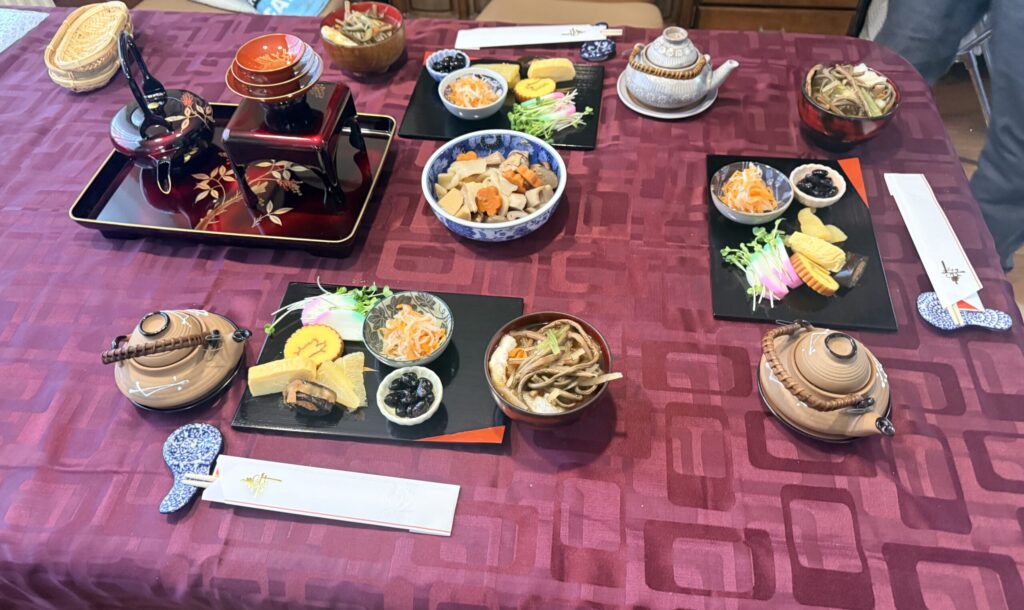
Served in boxes or on plates, the style and timing (New Year’s Eve or New Year’s Day) vary by region and family.
Datemaki (伊達巻: Sweet Rolled Omelet): Shaped like a scroll, symbolizing learning and knowledge.
Kuromame (黒豆: Black Soybeans): Symbolizes good health and diligent work.
Kazunoko (数の子: Herring Roe): Represents fertility and a prosperous family.
Namasu (なます: Pickled Radish and Carrot): The red and white colors signify celebration.
Kamaboko (かまぼこ: Fish Cake): The semi-circular shape resembles the rising sun.
Konbumaki (昆布巻き: Rolled Kelp): Represents joy and happiness.